During the Christmas holidays of 2001, my wife and I were plunged into a parent’s worst nightmare – a car accident resulting in our teenager’s traumatic brain injury. After a month-long coma, Bart gradually emerged with disabling cognitive, emotional, and physical deficits. Following eight months of grueling hospital therapies, the hospital and school district agreed that Bart was not ready to return to a classroom and would be better served by placement in an institution. We railed against warehousing our seventeen-year-old son in a nursing home. Then we began exploring safe alternative therapies.
We cobbled together an unofficial ‘medical board’ of trusted physicians. These professionals didn’t know each other or that they served on our unofficial board. When we found a promising alternative therapy, we’d ask each of them whether they thought it might do any harm. Some exciting approaches failed this Hippocratic test. Others, like Hyperbaric Oxygen (HBOT), Craniosacral therapy, neurofeedback, and mega-doses of Omega-3 fish oils, were remarkably successful, gradually transforming Bart’s life.
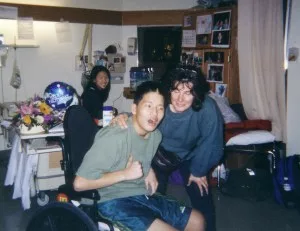
There was a lot riding on it. Bart had been allowed to return to school provisionally, but only for half-days in Special Education classes, accompanied by a dedicated aide. Every half hour or so, he’d fall asleep, nodding off midsentence. Sleeping the day away was no laughing matter. If he failed to keep up in class, Bart would be removed from the high school. An extreme extrovert, he desperately needed to be around familiar faces, among people who loved him, to have even a fighting chance at recovery. Imagine our excitement and relief when, after only four sessions of HBOT, he was able to make it through the entire day without a nap! Successes were anecdotal, but a neuropsych exam several years after the accident reported that the examiner had hardly ever seen such improvement in someone so severely injured.
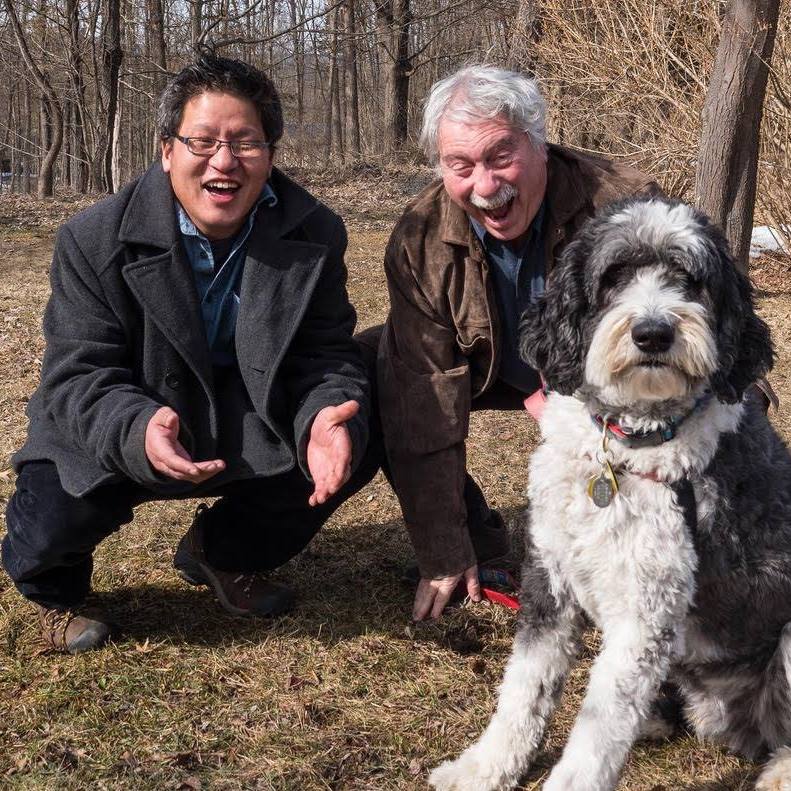
Bart became a lively, charming young man, living nearly independently in his own apartment, holding a part-time job, making new friends, and moving on with his life. How different the outcome would have been had we heeded the advice of well-meaning, busy bureaucrats. Our son passed away in 2022, 21 years post-injury, but not before making a remarkable recovery driven by alternative therapies, especially HBOT. He lived a full and meaningful life dedicated to encouraging and inspiring others on similar journeys. Five hundred people attended his memorial service.
For survivors of severe TBI, safe alternative therapies are not merely a reasonable option, they are often a necessity. Best practices of conventional medicine only take us so far, often ending at the nursing home door or, heavily medicated at home, facing long, empty hours, and overwhelming families.
TBI will remain a tragic legacy of wars in Afghanistan and Iraq for a generation. According to the TreatNOW Alliance, there are over 877,450 TBI survivors among combat veterans. The sheer weight of numbers and astronomical costs of life-long care for the wounded present a unique opportunity to improve outcomes for TBI survivors, military as well as civilian. HBOT is safe and effective, easy to deploy and quickly scalable, and has become standard treatment for TBI/PTSD overseas in places as diverse as Israel and China, and is increasingly embraced by NFL, NHL, and MLB teams. The Philadelphia Flyers offer it to players and even former players who may struggle with TBI/PTSD.
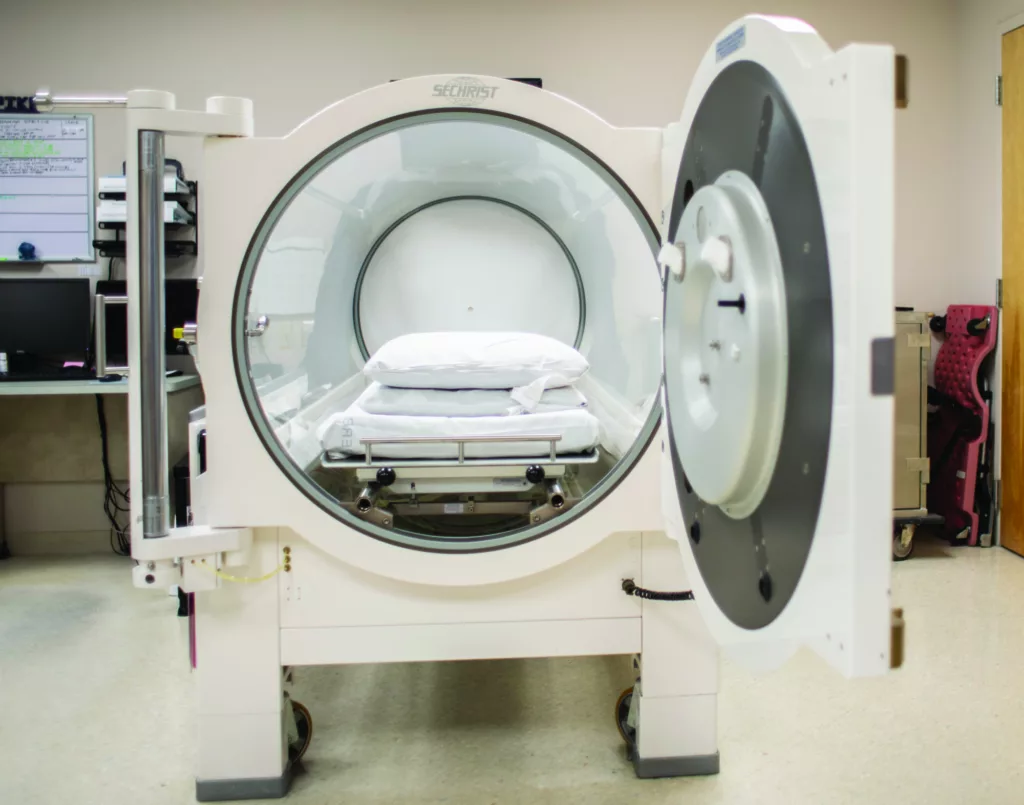
Why, if HBOT is safe and effective, is it still not approved by the FDA and thus covered by insurance? That may never happen, since there is no entity (drug company or medical device manufacturer) willing to spend millions to drive the FDA approval process, when there is no way to obtain an ROI on their investment. HBOT chambers are already in ample supply.
Despite that bureaucratic log-jam, HBOT is increasingly endorsed by prestigious medical journals, such as World Neurosurgery. Their conclusion: “HBOT using 1.5 atmosphere absolute in increments of 40 sessions was found to be a safe and effective modality in the management of the long-term sequelae of TBI. HBOT should be considered in the management of this patient population.”
Another recent article in Psychiatric Times concludes: “HBOT can bring about dramatic improvement in many neurological conditions for which we have had very little to offer other than palliative care. Considering the high incidence of many of these neurological conditions, the safety of treatment, and the simplicity and relatively low cost of mild-HBOT, it is unfortunate that it is not more widely available.”
In response to the veteran suicide epidemic, fourteen states have passed legislation enabling state-funded access to HBOT for veterans with TBI/PTSD. Our foundation is fighting to get the “Bart Law” passed and funded in NYS, making HBOT available to NYS veterans struggling with TBI/PTSD.
If you reside in New York, please tell your NYS Assemblyperson and Senator that you support this life-saving legislation. Whatever state you reside in, ask your state legislators or congress members to join the movement to provide life-saving hyperbaric medicine to veterans. To find out more, contact TreatNow or reach out to us.
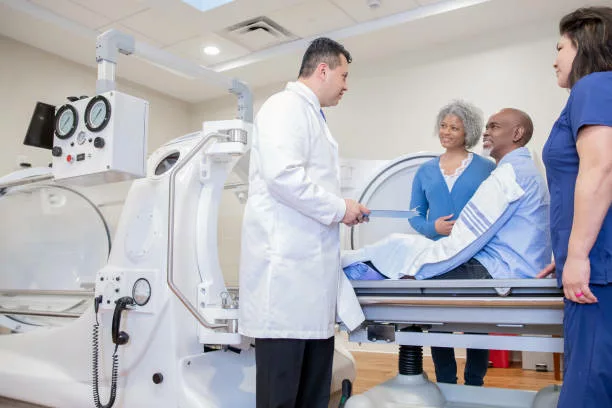
It may seem common sense to defer to our physicians for a verdict on the merit of HBOT as healing medicine for brain injuries. After all, they’re the experts, right? Not in this case! Ignorance among many physicians (at least here in the USA) is the main reason the adoption of HBOT by state legislatures has been so painstakingly slow. Yet there is a vast and growing body of evidence and clinical experience demonstrating the safety and efficacy of HBOT as treatment for brain injuries. One of the top sources is the database at TreatNOW.org.
To do nothing, which is to ignore safe alternative therapies, is to make a decision fraught with risk, since survivors are already more liable to a number of conditions, including Alzheimer’s, Parkinson’s, suicide, substance abuse, and subsequent TBIs. The financial and human costs to survivors, families, and communities are far greater than the cost of providing HBOT. Faced with such an existential dilemma, our family chose to try for a better outcome. Military families of wounded heroes, who have already sacrificed so much, deserve no less.
Joel Goldstein is Executive Director of the Brain Alternative Rehabilitation Therapies Foundation, (BART Foundation), a 501(c)(3) public charity. He is a member of the TreatNOW Alliance team. Author of “No Stone Unturned: A Father’s Memoir of His Son’s Encounter with Traumatic Brain Injury,” (University of Nebraska Press, 2012), he has written about brain injury for Brainline.org, Exceptional Parent Magazine, Adoption Today and Rehab and Community Care Medicine.
Guidestar Seal of Transparency